Tree Safety & Risk Prevention
Emergency Tree Service in North Idaho: What to Do When a Tree Comes Down
Mick · August 6, 2026
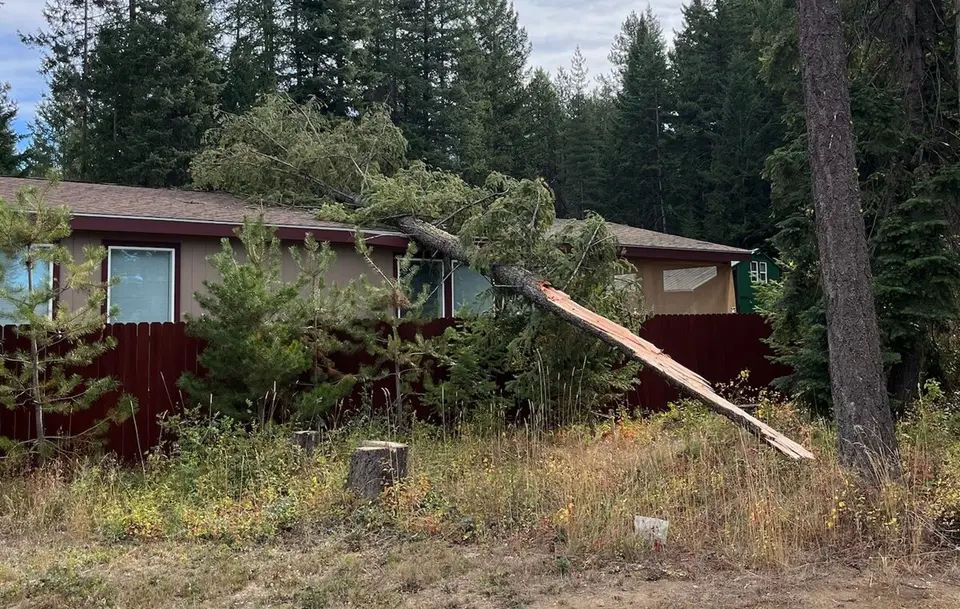
The short answer: Stay out from under the tree, treat every downed line as live and call the utility, and photograph everything before anyone cuts. Then call a tree service with the rigging to lift a tree off a structure without dropping it through the rest of the roof. We answer 24/7 for storm emergencies across North Idaho and Eastern Washington, and the documentation we provide supports your insurance claim.
Storm work is different from every other kind of tree work. The tree is already broken, it is resting on something it should not be, and the loads inside it are unpredictable. What you do in the first hour matters more for your safety and your insurance claim than anything else, so this post is the checklist we wish every customer had taped inside a kitchen cabinet.
What December 2025 taught this region
On December 17, 2025, a windstorm tore through the Inland Northwest with gusts that outran the infamous 2015 storm. The weather service measured 66 mph at Coeur d’Alene and 75 mph at Spokane International, with gusts over 80 mph recorded south of us toward the Palouse. More than 70,000 Avista customers lost power. Trees closed streets across the region, and in Fernan Village a man was killed when a falling tree came into his home while he slept.
We put that history here for two reasons. First, it is the honest answer to “does that really happen here”: it does, and not rarely. Between the December storm and the follow-up windstorm that hit the region in March 2026, our area had two major tree-throwing events in four months. Second, the storm showed the pattern we see on every emergency call. The trees that failed were disproportionately the ones with existing problems: root disease, beetle kill, saturated shallow soils, and overextended crowns. Storms do not pick trees at random. Which is why the cheapest emergency call is the hazard removal you schedule in October.
First steps, in order
1. Get people out from under it. A tree resting on a house is not done moving. Rootballs tip back, cracked stems finish breaking, and hung limbs release without warning. Keep family and neighbors out of the rooms under the strike and away from the tree outside.
2. Treat every line as energized. If the tree brought down a power line, or is leaning into one, stay far back and call the utility before anyone else. Avista and the local co-ops clear their own lines; no tree crew touches a tree in contact with a conductor until the utility makes it safe. Downed lines in snow are especially easy to miss.
3. Kill the obvious hazards inside. If the strike opened the roof or walls, and you can do it safely, shut off breakers to damaged rooms and close the propane valve if you smell gas. Widespread propane use in our rural areas makes this a real item, not boilerplate.
4. Photograph everything before anyone cuts. More on this below, because it is the step people skip.
5. Then call us. Describe what the tree is on, whether lines are involved, and whether the house is occupied. That tells us what equipment rolls: rigging gear, a lift, a loader, or all three.
What not to do: do not send anyone onto the roof, and do not let a neighbor with a chainsaw start bucking the trunk. A stem under load stores enormous spring tension, and cutting it in the wrong order can roll the whole tree, or drive the butt through the wall it was resting beside. Storm-loaded wood is the most dangerous cutting there is, and it is where untrained help gets hurt.
Documenting for your insurance claim
Homeowner policies generally cover tree damage to structures, and insurers handle claims better when the file is thorough. Build yours before cleanup starts:
- Wide shots first. The whole tree, where it stood, and what it hit, from several angles. Capture the relationship: this tree, that roof.
- Close shots second. The point of impact, crushed framing, torn shingles, bent gutters, damaged fences and vehicles, and the tree’s base or rootball.
- Interior damage. Ceiling cracks, water intrusion, anything that shifted.
- Timestamps and weather. Phone photos carry timestamps automatically. Note the storm date; for a documented event like December 17 the adjuster already knows the wind data.
- Keep every receipt. Emergency tarping, board-up materials, the tree work invoice, even a motel night if the house was not livable.
Two things adjusters and policies expect. You have a duty to prevent further damage, so reasonable emergency work, tarping the roof, getting the load off the structure, should not wait days for an adjuster visit. And the tree work invoice should say what actually happened: tree on structure, emergency removal, not a vague “tree service” line. Our storm invoices itemize the situation and the work for exactly that reason, and we photograph our own before-and-after on every emergency job so you have a second set of records.
One coverage note worth knowing before you need it: policies typically pay to remove a tree that hit a structure, but a tree that fell harmlessly in the yard is often not covered, and a standing dead tree the insurer flagged in advance can become a denied claim. If your insurer has sent you a letter about trees over the house, act on it.
What we do when we arrive
Storm calls start with a safety read: what is under load, what moves when the load changes, what is the tree touching. Then the tree comes off in controlled pieces, rigged and lifted away from the structure rather than rolled off it. On a house strike, the goal is to remove weight without letting anything else fall into the hole it made. After the tree is down and decked, we help get the roof tarped and the driveway open, and full cleanup can happen then or after the adjuster visit, your call.
We run this service across our whole area, Blanchard to Sandpoint to Coeur d’Alene and the Washington side around Newport and Deer Park. Storm nights get triaged: occupied houses with trees on them come first, driveways and outbuildings next. The full rundown is on our emergency tree service page.
Common questions after storm damage
Who removes a tree that fell on power lines?
The utility, first. Any tree in contact with a line, or close enough to reach it, is the utility’s to make safe; call their outage line and stay far away. Once the line is de-energized or cleared, a tree crew handles the removal. No reputable crew cuts near live conductors.
Will insurance pay to remove a tree that fell on my house?
Generally yes: homeowner policies typically cover removing a tree from a damaged structure and repairing the damage, subject to your deductible and limits. A tree that fell in the open yard without hitting anything often is not covered. Photograph everything, keep receipts, and confirm specifics with your agent.
My neighbor’s tree fell on my property. Who pays?
Usually your own policy handles damage on your side, regardless of where the tree grew; that is how insurers process it. The exception is negligence: if the tree was visibly dead or hazardous and the owner ignored it, their liability coverage can come into play. Document the tree’s condition either way.
Should the tree come off the roof before the adjuster sees it?
Photograph thoroughly, then yes, do not wait if the tree is causing ongoing damage or the roof is open to weather. Policies expect you to prevent further damage, and adjusters work from photos routinely. Emergency removal and tarping receipts belong in the claim file.
How fast can you get here after a storm?
We answer 24/7 for storm emergencies and respond as fast as conditions allow. During a regional event like December 2025, calls get triaged: occupied homes with trees on them first. Calling early with a clear description of what the tree is touching helps us stage the right equipment.
The best time to save our number is before the wind picks up. Put (208) 920-9979 in your phone, and if a tree is already where it should not be, call us now and start taking pictures while we roll.