Trimming for snow load
Snow here is the wet, heavy kind, and it is the number one reason limbs fail. Long horizontal branches, tight forks with included bark, and dense pads of foliage at branch ends all collect load until something gives. Weight-reduction trimming shortens and lightens those limbs before winter, cutting back to strong laterals so the branch keeps its shape at a length it can carry. On firs and pines we thin where snow builds, and on older trees we deal with codominant tops before the snow picks one for you. Fall is the busy season for this work for a reason: the trees that get lightened in October are not the ones we get called about in January.
Structure trimming that pays off for decades
The cheapest trimming a tree will ever get is while it is young. Removing crossing limbs, correcting double leaders, and building good branch spacing on a fifteen-foot tree takes an hour and shapes the next fifty years of growth. On mature trees, structure trimming means removing deadwood, easing weight off long overextended limbs, and cutting to laterals so the tree closes wounds properly. We make proper cuts at the branch collar, we do not leave stubs, and we do not strip out the interior growth that keeps a limb strong. Trees around here grow fast. A little correct trimming on a schedule beats a big ugly intervention later.
Roof clearance and view trimming done right
Limbs over a roof drop needles into gutters, wear on shingles, and give squirrels a highway, so we trim for real clearance while keeping the tree balanced. View work is where our region gets trimming badly wrong. Lake and mountain views around Priest Lake, Spirit Lake, and Pend Oreille tempt people into topping, and a topped pine answers with a mop of weak regrowth that blocks the view again in three years and breaks in every storm after. We open views by windowing through the canopy, raising the skirt, thinning selected limbs, and sometimes removing one whole tree so its neighbors can stay natural. You get the water. The trees stay trees.
What does tree trimming cost in North Idaho?
Trimming is priced by time on the job, and a few things drive it: how tall the trees are, how many need work, how long it has been since the last trimming, and access for the bucket truck versus a climb. A tree trimmed on a regular cycle costs a fraction of one getting its first attention in twenty years, because there is simply less to cut and haul. Debris volume matters too. We quote per tree or per job at the free on-site estimate, in writing, before any saw starts.
Why homeowners call us
- Weight reduction before the snow flies
- Roof, chimney, and driveway clearance
- View trimming that keeps the tree sound
- No topping, no stub cuts, ever
- Climbers and bucket trucks for any height
- Every limb chipped, hauled, and raked up
How the job goes
- STEP 1
Look at the trees together
You tell us what bothers you, we tell you what the tree needs. Those two lists usually overlap, and the estimate is free either way.
- STEP 2
Set the plan per tree
Each tree gets its own scope: clearance cuts, weight reduction, deadwood, or view windows, written down so you know what is coming off.
- STEP 3
Trim it properly
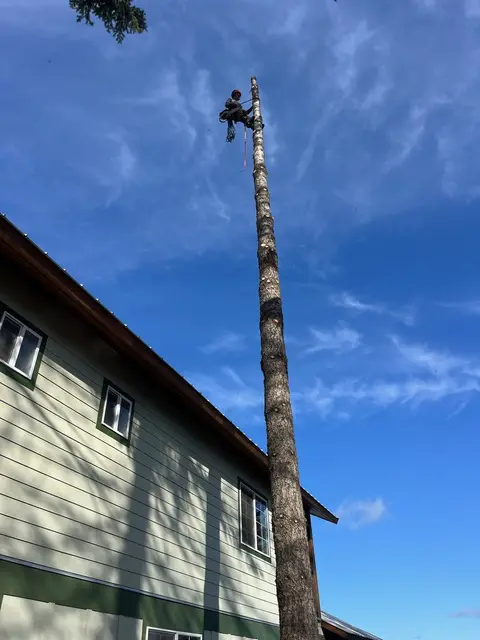
We climb or work from the bucket truck, making collar cuts to good laterals. Nothing gets topped and nothing gets stripped.
- STEP 4
Chip and clean
All brush goes through the chipper, wood gets stacked or hauled as you prefer, and the lawn gets raked before we roll out.
Tree Trimming questions
When is the best time to trim trees in North Idaho?
Late fall through early spring is ideal for most of it, when trees are dormant and weight reduction lands before the heavy snow. Deadwood can come out any time of year. If a limb is over your roof or has a crack in it, trim now, in whatever month you noticed it.
Do you top trees?
No. Topping forces a burst of weakly attached regrowth that blocks views again within a few years and fails in wind and snow, leaving the tree worse on every count. We get the same light or view with windowing, thinning, and skirt raising, or we remove the tree cleanly if that is what the situation honestly calls for.
How much can you take off a tree at once?
As a working rule we keep it to about a quarter of the live canopy in a single visit, and less on old or stressed trees. Taking more pushes the tree into stress regrowth and costs you the benefit of the trimming. Big corrections are better done in stages a couple of years apart.
Can you open up my lake view without killing the trees?
Yes. We window through canopies, raise lower limbs, and thin selected branches so sightlines open while the trees stay structurally sound. Sometimes the honest answer is removing one tree entirely so three others stay untouched. We will stand where you stand, look at the water, and tell you which cuts get you there.