What an overstocked stand actually looks like
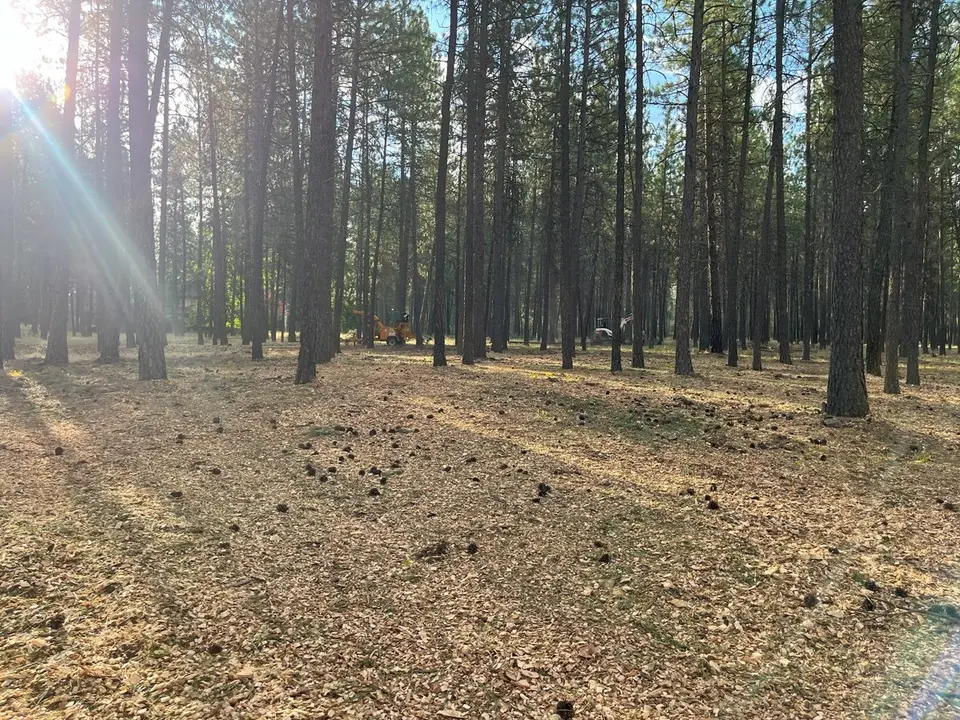
Walk into a typical untouched parcel around here and you will find doghair thickets of fir, suppressed saplings under mature pines, dead lower limbs to head height, and crowns grown into each other. Every tree in that stand is competing for the same summer water, and in a dry August none of them get enough. Growth slows, tops thin out, and the whole stand runs stressed. Stacked underneath is the fuel problem: continuous ladder from duff to brush to sapling to canopy. Thinning breaks both problems at once. We take the suppressed, damaged, and crowded stems, keep the best-formed dominant trees, and open the spacing so what remains grows like it should.
Thinning is your best defense against pine beetles
Pine bark beetles are killing stands across North Idaho, and they do not pick trees at random. Beetles overwhelm trees that cannot push enough pitch to expel them, which means drought-stressed, overcrowded pines are exactly the target. A thinned stand fights back: fewer stems sharing the water means every remaining tree carries more pressure in its defense system, and wider spacing disrupts the beetles as they try to concentrate attacks. Thinning will not save a stand already under mass attack, and we will tell you when what you need is removal of hit trees instead. But on a stand that is still green, thinning now is the difference between managing a forest and cleaning up after one.
Forestry mulching or cut and haul, matched to the ground
How the cut material leaves matters as much as the cutting. For brush, saplings, and small-diameter stems, our forestry mulcher grinds everything where it stands into a layer of chips that holds moisture, slows regrowth, and skips burn piles entirely. It is fast, it leaves no slash, and it is the right call for most fuels-reduction thinning. Where the thinning takes merchantable trees, we fell, limb, and deck logs for haul instead, and on the right parcel the log value offsets part of the job. Steep ground, wet ground, and tight access each change the toolset. We run both systems and quote whichever fits your parcel, sometimes both on the same job.
What does forest thinning cost in North Idaho?
Thinning is priced by the acre against the condition of the stand. The drivers are stem density and average size of what comes out, brush load underneath, slope and access for the mulcher, and whether material gets mulched on site, piled, or hauled. Merchantable logs from the thin can offset part of the bill on the right parcel. Idaho Department of Lands and WA DNR cost-share programs frequently apply to exactly this work, and we will flag it when your acreage looks like a fit. Quotes are free and happen on the ground, not from an aerial photo.
Why homeowners call us
- Remaining trees get the water, light, and wind resistance
- Ladder fuels and doghair thickets gone
- Beetle resistance through spacing and vigor
- Forestry mulcher leaves chips, not burn piles
- Merchantable logs decked and hauled when it pays
- Reads as parkland after, not a clearcut
How the job goes
- STEP 1
Cruise the parcel together
We walk the stand, look at stocking, species mix, beetle sign, and fuels, and hear what you want the land to be in twenty years.
- STEP 2
Mark the approach
You get a plan for what comes out and what stays, keep-tree criteria included, plus whether material gets mulched, decked, or hauled.
- STEP 3
Thin the stand
The crew cuts and the mulcher processes, working the parcel systematically. Keep trees are protected from equipment damage throughout.
- STEP 4
Leave it finished
Slash is mulched or hauled, logs are decked for pickup if merchantable, and we walk the finished stand with you before we call it done.
Forest Thinning questions
How many trees should be removed when thinning?
It depends on how overstocked the stand is, but on untouched parcels here it is common for a third to half the stems to come out, nearly all of them small, suppressed, or poorly formed. The rule that matters is crown spacing on what remains. We set keep-tree criteria with you before anything is cut.
Will thinning help with the bark beetles?
It is the best preventive tool there is. Beetles kill stressed trees, and overcrowding is the main source of stress in these stands. Thinning gives remaining pines the water and vigor to pitch beetles out. It is prevention, though, not treatment: trees already hit need removal, and we can spot the difference on the walk-through.
What is forestry mulching?
A tracked machine with a drum head that grinds standing brush and small trees into chips where they stand, in one pass. No felling, no dragging, no burn piles, and the chip layer suppresses regrowth and holds soil moisture. It is the fastest, cleanest way to handle small-stem thinning, and we run one on most acreage jobs.
Is thinning the same as logging my property?
They overlap but the goal differs. Thinning is a forest health and fire cut: what comes out is chosen to improve what stays, and much of it is small material with no market value. Selective logging targets merchantable timber and can pay for itself. Plenty of parcels want both, and we do both on the same job.