
The small-tract gap is where we live
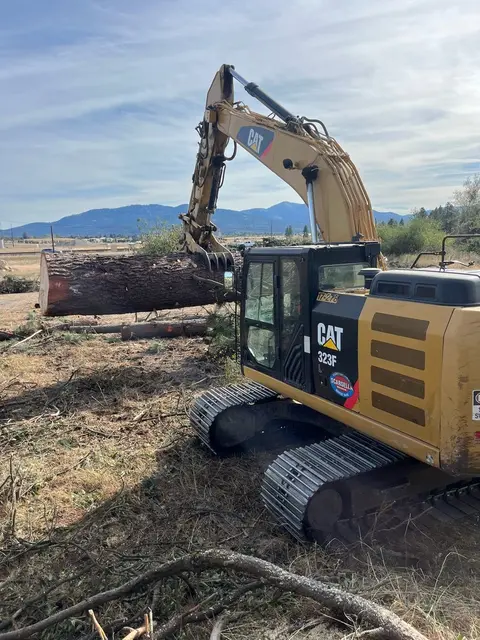
A landowner with fifteen wooded acres gets the same answer from both directions: too small for the commercial sides, too big for a residential tree crew. So the parcel sits, overstocked and unmanaged, until beetles or a windstorm make the decisions instead. Our operation is sized for exactly this work. The mini excavator with grapple saw, a compact skidding setup, and a crew that came up doing hazard-tree removal means we can run a selective harvest on ground where a full logging side will not mobilize, and do it without leaving the parcel looking like a war zone. Small-tract logging is not a sideline for us. It is the second thing we are known for.
What 5 to 40 wooded acres can actually yield
Here is the honest version. A stocked North Idaho parcel carries real merchantable timber: sawlog ponderosa, Douglas fir, and western larch all have markets, and cedar brings a premium when quality is there. On a good parcel, log value can offset a meaningful share of the harvest and cleanup cost, and occasionally a landowner nets money. But small tracts carry fixed costs that big sales spread thin, and value swings with species mix, log size and quality, road access, haul distance to the buyer, and where the market sits the month the logs move. Anyone quoting your timber's value from a driveway conversation is guessing. We walk the stand and give you a range with the reasoning attached.
A harvest should leave the forest better
Selective logging done right is thinning that pays. We mark the harvest around what stays: taking the crowded, suppressed, beetle-hit, and declining stems, keeping the best-formed trees with room to grow into the openings. That kind of cut lowers fire risk, hardens the stand against pine beetles, and grows better timber for the next decade than the parcel was growing before. What we do not do is highgrade, the practice of stripping the best trees and leaving the junk, which flatters the first check and beggars the forest. If a clearcut patch genuinely serves the plan, a building site or a pasture corner, we will say so plainly and cut it clean.
Log decks, haul, and where your wood goes
Harvested logs get skidded to a landing on your parcel, bucked to the lengths buyers want, and decked for pickup. From there we arrange haul to regional mills and buyers, and settlement for the delivered logs flows against the cost of the job, all of it in writing so you see load counts and what each haul brought. Some owners keep wood back: house logs for a future build, a deck of sawlogs for a portable mill, firewood bucked from the tops. That is your timber and your call. One thing we want said in plain terms: we are a logging crew, not a mill and not a timber buyer, so our only interest is running your harvest well.
What does small-acreage logging cost in North Idaho?
Logging jobs are priced as harvest cost against log value, and the two move together. Harvest cost follows tree count and size, terrain, skid distances, landing access, and slash handling. Log value follows species, quality, volume, and haul distance to buyers. On well-stocked parcels with decent access, timber receipts offset a large share of the work, and the written plan shows both sides of the ledger before you commit. Parcels with small or beetle-checked wood lean toward a net cost, and we say so upfront. The stand walk and the numbers are free.
Why homeowners call us
- Sized for the parcels big outfits will not touch
- Straight talk on timber value, range and reasoning included
- Harvest marked around what stays, never highgraded
- Beetle-hit and declining stems out, best trees kept
- Logs decked, hauled, and settled in writing
- The stand is healthier and safer when we leave
How the job goes
- STEP 1
Walk the stand
We cruise the parcel with you, look at species, size, quality, and access, and talk through what you want from the land long term.
- STEP 2
Mark and agree the harvest
You get a written plan: what gets cut and why, what stays, a value range for the logs with the reasoning, and the cost of the work.
- STEP 3
Fell, skid, and deck
The crew harvests the marked trees, skids to the landing, and bucks and decks logs to buyer spec, protecting keep-trees throughout.
- STEP 4
Haul, settle, clean up
Loads go to mills and buyers, settlement is documented against the job cost, slash is mulched or piled per the plan, and we walk the finished stand together.
Logging questions
Is my property big enough to log?
If you have a few stocked acres, probably. Our sweet spot runs from about 5 to 40 wooded acres, exactly the tracts industrial outfits pass on. What matters more than raw acreage is what is standing on it and whether a truck can reach a landing. The walk-through costs nothing and settles the question honestly.
Will the timber pay for the work?
Sometimes fully, often partly, occasionally not at all, and we will tell you which before anything is cut. Value depends on species, log size and quality, volume, access, haul distance, and the market that month. Good sawlog fir, larch, and pine offset real cost. Small, rough, or beetle-checked wood mostly does not. You get a range with reasoning, never a promise.
Do you clearcut?
Not as a default, and never to juice log volume. Our standard cut is selective: crowded, declining, and beetle-hit trees out, the best stems kept with room to grow. Where a clean opening genuinely serves your plan, a home site, pasture, or view corridor, we cut it deliberately and treat it as land clearing with a timber credit.
What happens to the tops and slash?
Your parcel stays usable. Depending on the plan, slash gets mulched by the forestry machine, piled for your burning, or hauled, and tops can be bucked into firewood if you want the wood. What we do not do is leave a lopped-and-scattered mess that reads as fire fuel. Slash handling is specified in the written plan before we start.
Are you a timber buyer?
No, and that is deliberate. We are the harvest crew: we cut, skid, deck, and arrange haul to mills and buyers, with load tickets and settlement documented to you. Because we are not buying your logs, we have no reason to talk value down or highgrade the stand. Our incentive is a well-run job you would hire twice.