
Reclaiming acreage that got away
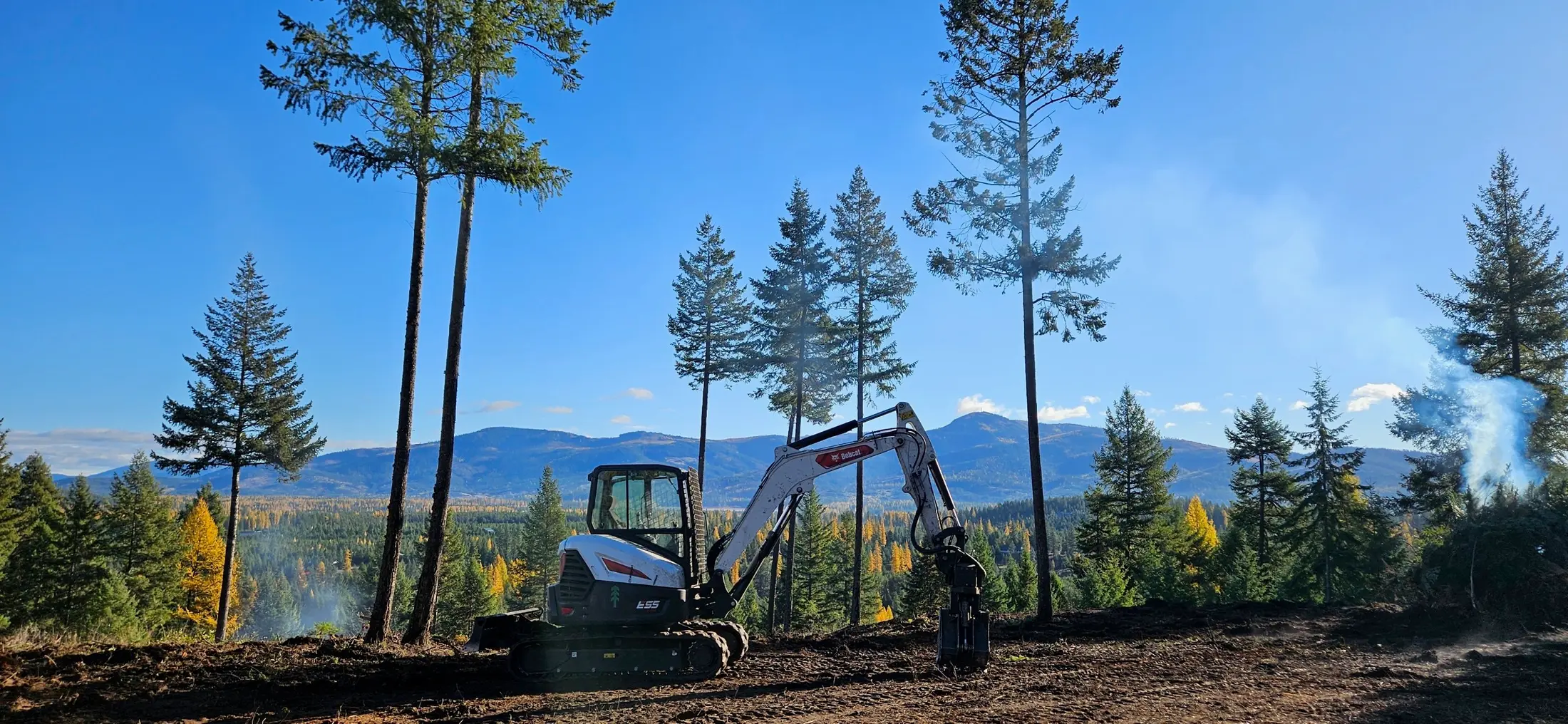
The most common land clearing call we get is a parcel the years won. Someone bought ten acres with an open meadow, and fifteen years later it is doghair fir, brush to the shoulders, and no way through. Overgrown ground is harder to sell, harder to build on, harder to insure in fire country, and no fun to own. Clearing it back is straightforward with the right equipment: the forestry mulcher grinds brush and small-diameter volunteer trees where they stand, larger trees get felled and decked or hauled, and what was a wall of growth becomes ground you can mow, graze, or plan a building on. Most parcels come back faster than owners expect once machines are actually on them.
Grubbing: what is under the brush matters
Clearing the green layer is half the job. What is left underneath decides whether the ground stays usable: stumps, root balls, buried slash, and rock that will eat a brush hog or heave up through a future pasture. Where the land is headed for mowing, grazing, or eventual building, we grub with the mini excavator and grapple, pulling stumps and major roots and sorting out the debris rather than burying it. Where the goal is a walkable, fire-safe woodlot, mulching to grade is enough and costs less. The difference between those two finishes is real money, so we scope both honestly and match the finish to what the ground is actually for.
Pasture, fence lines, and the edges that creep
Working land here loses ground from the edges in. Timber leans into pasture a few feet a year, fence lines get swallowed until the wire is stapled to live trees, and field corners round themselves off into brush. We push the edges back: clearing fence corridors so you can build or fix wire on open ground, cutting the encroachment line back to where the field is supposed to end, and reclaiming corners and low spots the brush took first. For grazing land, mulched edges regrow slower and cleaner than bladed ones, and the chips feed the ground instead of leaving bare dirt to weed over. A cleared perimeter also makes the whole parcel easier to keep, since you can finally get equipment around it.
What does land clearing cost in North Idaho?
Acreage clearing is priced by machine time against the ground, and the drivers are density and stem size of what is standing, acres covered, slope and rock, how wet the ground is, and the finish you want: mulched to grade costs meaningfully less than grubbed clean. Haul distance for logs and debris matters, and decked timber can run the number back the other way on well-stocked parcels. We quote after walking the parcel, not from satellite photos, and the walk and the written number are free.
Why homeowners call us
- Forestry mulcher clears brush acres fast, no burn piles
- Stumps and roots grubbed where the ground will work
- Fence-line corridors opened for new wire
- Pasture edges pushed back to the property line
- Logs decked or hauled, debris actually removed
- Finish matched to mowing, grazing, or building plans
How the job goes
- STEP 1
Walk the parcel
We cover the ground together, find the old edges and fence lines, and get clear on what the land is for: pasture, access, building, or fire safety.
- STEP 2
Scope the finish
The quote spells out what gets mulched to grade, what gets grubbed clean, and what timber is worth decking, so the price matches the plan.
- STEP 3
Clear and grub
Mulcher and excavator work the parcel systematically: brush ground in place, trees felled and sorted, stumps pulled where the finish calls for it.
- STEP 4
Leave working ground
Debris is hauled or mulched, logs are decked, and the parcel is left as usable ground you can mow, graze, fence, or build on.
Land Clearing questions
How overgrown is too overgrown to reclaim?
We have not met that parcel yet. Brush and volunteer trees up to small-sawlog size go through the mulcher, and anything bigger gets felled and handled as timber. The practical limits are slope, rock, and wet ground, which change the equipment and the price rather than the answer. Decades of neglect come off in days of machine time.
Do you burn the debris?
Our default is no piles at all: the mulcher grinds brush and small trees into chips that stay on the ground, and bigger wood gets hauled or decked as logs or firewood. That avoids burn-window waiting, smoke, and half-burned pile scars. Where a landowner specifically wants material piled for their own burning, we can stage it that way instead.
Can cleared ground go straight back to pasture?
Mulched ground can be seeded into the chip layer, and grass comes in as the chips break down, though the first season is transitional. For faster, cleaner pasture, we grub the stumps, let you work the ground, and seed into soil. It costs more up front and mows clean from year one. We will lay out both paths honestly.
Is land clearing the same as lot clearing?
Same tools, different scale and finish. Lot clearing preps a defined building footprint, with stumps grubbed to construction standard. Land clearing works whole parcels: pasture reclaim, fence lines, brush acreage, and access, where most ground gets mulched to grade rather than excavated. Plenty of projects include both, a grubbed home site inside a cleared parcel.