
From wooded lot to buildable pad
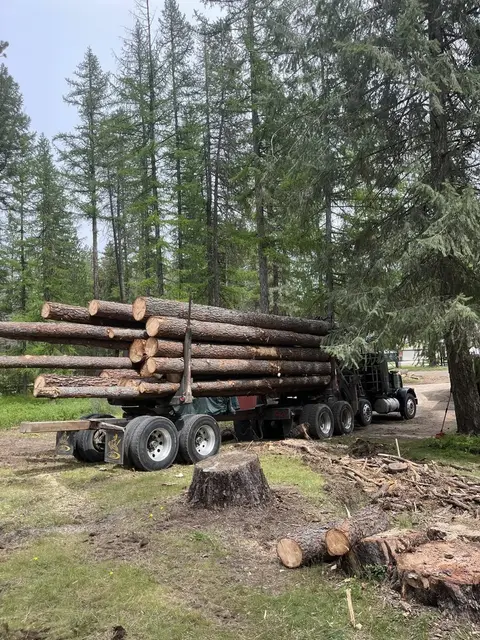
A building site needs more than trees dropped. It needs them gone: felled, bucked, hauled or decked, and the stumps grubbed out with roots, because a foundation or slab cannot sit on ground full of rotting root wood. Our mini excavator with the grapple saw does the pulling and sorting, the chipper eats the brush, and merchantable logs get decked for sale or milling where the timber is worth it. We clear to your site plan: house footprint, septic and drainfield area, well access, driveway corridor, and the working room the dirt and concrete crews will need around all of it. When we leave, the excavation contractor starts digging, not cleaning.
Clear what you must, keep what you love
The best lots here keep their big trees, and the worst mistake in lot clearing is wrecking the ones you meant to save. We walk the lot with you before anything runs and flag the keeps: the mature ponderosas framing the house site, the cedar by the creek, the screen along the road. Then we protect them while we work, keeping equipment off their root zones and skipping the blade-scars and soil compaction that kill a saved tree slowly over five years. We will also tell you honestly when a tree you want to keep is a bad bet: beetle-hit, rot at the base, or destined to lean over your new roof.
Building in this timber has local rules of thumb
Clearing a lot around here is not the same job as clearing one in farm country. Most building sites in our area sit inside the wildland-urban interface, so it pays to clear with defensible space in mind from day one: keep crowns off the future roofline and thin the fringe of the clearing rather than leaving a hard wall of timber thirty feet from the house. Septic drainfields want sun and want roots kept away. Snow storage needs a place to go that is not against your keep-trees. And a south-facing clearing dries out and greens up weeks earlier in spring. We have cleared enough sites in these woods to raise these points before the dirt work makes them expensive.
What does lot clearing cost in North Idaho?
Lot clearing is quoted per site, and the number moves with how much is standing on the footprint: tree count and size, brush density, how many stumps get grubbed versus ground, and haul distance for the debris. Rock and slope change equipment time. Timber value runs the other direction, since decked logs from a well-stocked lot can offset part of the cost. A thinly treed flat acre and a heavily timbered slope are very different jobs, which is why we quote on the ground with your site plan in hand. The estimate is free.
Why homeowners call us
- Cleared to the site plan, never simply knocked down
- Stumps grubbed with roots, ready for foundations
- Keep-trees flagged and protected from equipment damage
- Brush chipped, logs hauled or decked for value
- Driveway, septic, and well corridors cleared in one pass
- Defensible space thinking built in from day one
How the job goes
- STEP 1
Walk the lot with your site plan
We match the clearing to the actual layout: house, shop, septic, well, and driveway, and flag every tree you are keeping.
- STEP 2
Fell and sort
Timber comes down and gets sorted on site: logs decked for sale or milling, firewood bucked if you want it, brush staged for the chipper.
- STEP 3
Grub the stumps
The mini excavator pulls stumps and major roots from the build footprint so foundations, slabs, and the driveway sit on clean ground.
- STEP 4
Finish the site
Debris is chipped or hauled, the pad is left clean and ready for excavation, and the keep-trees are still healthy and unscarred.
Lot Clearing questions
How much of my lot should I clear for a house?
The build footprint plus working room: house, garage or shop, septic and drainfield, well access, and the driveway, typically with 20 to 30 feet of working space around structures for the trades. Beyond that, thin rather than clear. It keeps the wooded feel, and it starts your defensible space instead of leaving a fuel wall at the clearing edge.
Do the stumps have to come out?
Under anything you are building, yes. Stumps and roots left below a foundation, slab, or driveway rot over the years and let the ground settle, which cracks concrete. On the rest of the lot, grinding below grade is fine and cheaper. We grub the footprint and grind the rest, and the quote separates the two so you can see the difference.
What happens to the timber that comes off the lot?
Depends on what is standing. Merchantable pine, fir, and larch get decked as logs and can offset part of the clearing cost when volume and access make hauling worthwhile. Smaller wood becomes firewood if you want it. Brush and tops get chipped on site or hauled. We sort it all as we go and tell you upfront what the timber side looks like.
Can you clear in winter?
Winter is often the best season for it here. Frozen ground carries equipment without rutting, the sorted logs stay clean, and you are first in line for spring excavation instead of waiting on a clearing crew in May. Deep snow years slow the stump grubbing, so the fell-and-clear can happen in winter with grubbing early in spring.