
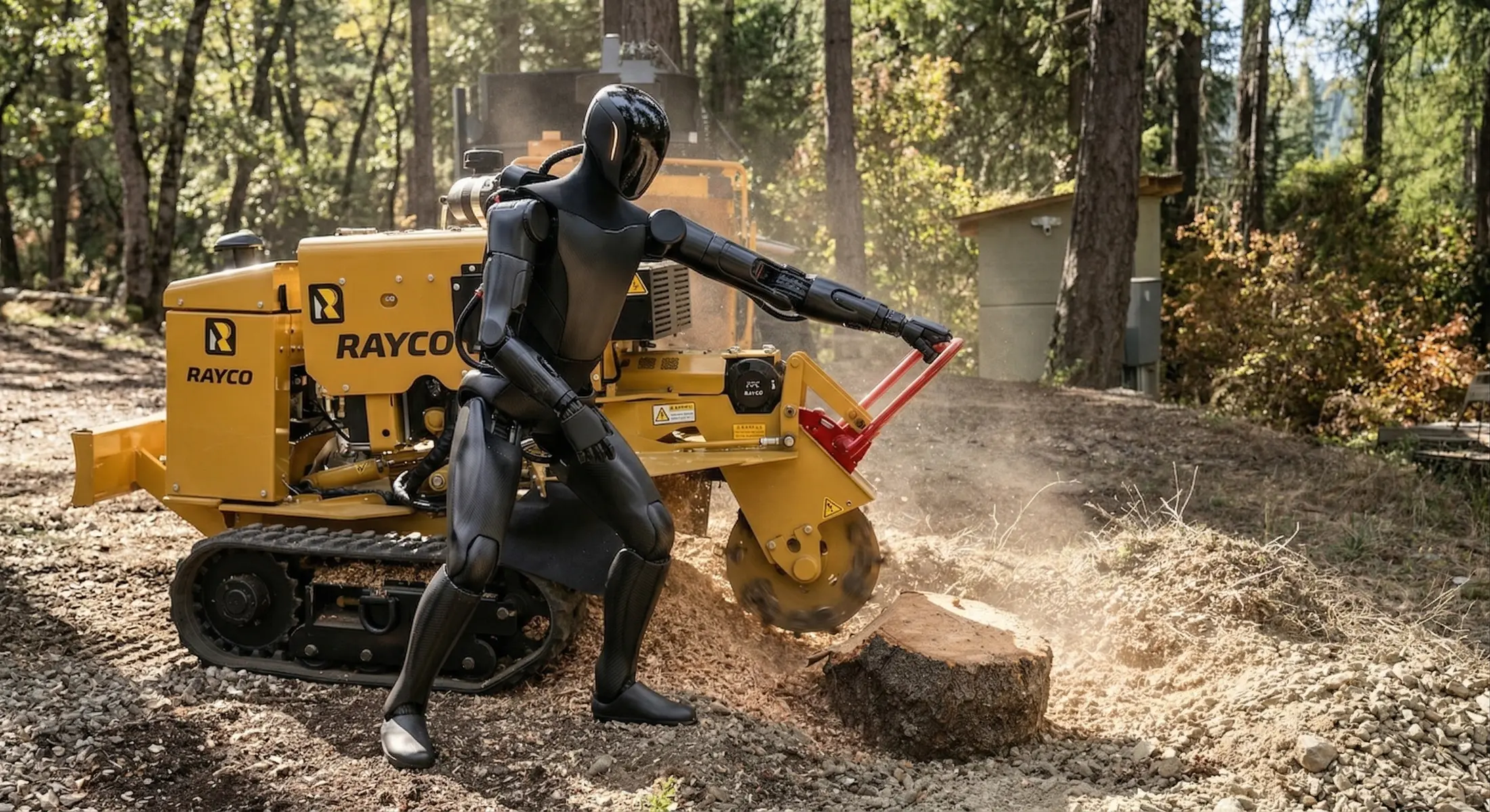
Ground below grade, ready for what is next
Flush-cutting a stump just hides the problem. We grind down well below the surrounding grade, chase the major surface roots where they matter, and leave a chip-filled depression you can finish however the spot will be used. For lawn, we can pull the chips, backfill with soil, and leave it ready to seed. For a future shed pad, fence line, or driveway edge, we grind deeper so roots do not push up through your project later. If a stump sits where a foundation or septic line is going, grinding may not be enough, and we will say so and quote full excavation with the mini excavator instead.
The remote-operated grinder earns its keep
A lot of stumps in this region sit in places a tow-behind grinder will never reach: behind fences, between the house and the well head, on slopes above the lake, in soft lawns that would rut under a heavy machine. Our remote-operated stump grinder fits through gates and works steep or tight ground while the operator stands clear with full sightlines. That is safer for the operator and gentler on the yard, and it means the stump in the worst spot on the property costs a normal amount instead of a stupid one. Lakefront places around Priest Lake and Spirit Lake are exactly where this machine pays off.
Pine country stumps have their own habits
The stumps we grind are mostly ponderosa, fir, larch, and cedar, and they behave differently than yard trees elsewhere. Big conifer stumps rot slowly in our dry summers, so waiting them out takes ten years or more. Dead and beetle-killed pines leave stumps that carpenter ants and beetles move into, and that colony sits twenty feet from your house. Cedar stumps hold their sapwood forever. Cottonwood and birch send up sucker shoots from the roots unless the stump is ground out properly. None of this is a crisis, but it is why the stump should go when the tree does, while the equipment is already on site.
What does stump grinding cost in North Idaho?
Stump grinding is priced mainly by the size and number of stumps. Diameter at ground level matters most, then how deep you need us to go, how many stumps are on the list, and what access looks like. Rocky ground and old fence wire grown into the wood slow the work. Hauling the grindings and backfilling with soil adds to the number, leaving chips on site keeps it down. Grinding stumps during the tree removal visit is the cheapest way to do it, since the equipment is already there. Every quote is free and in person.
Why homeowners call us
- Ground well below grade, never just flush-cut
- Remote-operated grinder fits gates, slopes, and tight yards
- Chips hauled or left as free mulch, your call
- Full excavation available for build sites
- Same-visit grinding when we do the removal
- Backfill and seed-ready finish on request
How the job goes
- STEP 1
Mark and check the site
We locate the stumps, flag what is nearby, and check for irrigation lines, utilities, and anything else a grinder should not meet.
- STEP 2
Pick the machine
Open access gets the standard grinder. Gates, slopes, and soft lawns get the remote-operated unit so the yard stays intact.
- STEP 3
Grind below grade
The stump and major surface roots get ground well below the surrounding soil, deep enough for the spot's next use.
- STEP 4
Finish the spot
Chips get raked into the hole, hauled away, or swapped for topsoil so the area is ready to seed. Nothing is left mounded.
From the Google reviews
"Repeat customer. Timber valley did a super job removing some trees for us and clearing up some stumps. They were proficient and friendly. Cannot recommend them highly enough."
Stump Grinding questions
How deep do you grind a stump?
Deep enough for what the spot is going to do next. For lawn and planting beds we grind well below grade so grass grows over it clean. For fence lines, pads, and driveways we take it deeper and chase the big roots. Tell us the plan for the spot and we grind to match it.
What happens to the pile of grindings?
Your choice. Many people keep them, since fresh chips make decent mulch for paths and beds once they age. Otherwise we haul them and can backfill the hole with topsoil so the spot is ready to seed. Grindings mixed with soil will settle as they break down, so pure chips should not fill a hole under lawn.
Should I grind the stump or dig the whole thing out?
Grinding handles almost every situation: lawns, beds, fence lines, and general cleanup. Full excavation makes sense when a foundation, slab, septic line, or driveway is going exactly where the root mass sits. We do both, we quote both at the estimate, and we will tell you plainly when the cheaper option is the right one.
Can you get a grinder into my fenced backyard?
Almost certainly. The remote-operated grinder is built for exactly that: it fits through standard gates, climbs slopes, and works soft ground without tearing it up, while the operator stands clear. In the rare yard even it cannot enter, we talk through options honestly rather than forcing a machine where it should not go.