
Trails, access roads, and fence lines are three different cuts
A walking path, a machine road, and a fence corridor look similar on a map and get built differently on the ground. A footpath needs a few feet of clear width, brushed back and limbed overhead, with deadfall bucked out of the way. An ATV or tractor route needs real width, gentler grades, overhead clearance for a cab, and stumps cut flush or ground so nothing catches an axle. A fence-line corridor needs a straight, clean strip wide enough to build and maintain wire, with the trees that would eventually drop limbs on the fence taken back. We ask what travels the route before we cut it, because widening a footpath into a road later costs more than building the road once.
Cutting through timber without wrecking it
The wrong way to build a trail here is to blade a straight line and let the slash and the erosion sort themselves out. We clear selectively: route the trail around the best trees instead of through them, take the brush and small stems with the mulcher, and buck deadfall rather than shoving it into rotting berms along the edge. On slopes, the route follows the contour where it can, because a fall-line trail in our soils turns into a creek every spring. Cut material gets chipped, hauled, or decked, never left as a fire ladder beside the path. A trail done this way disappears into the woods it runs through, and it is still a trail in ten years.
Snow, blowdown, and keeping routes open
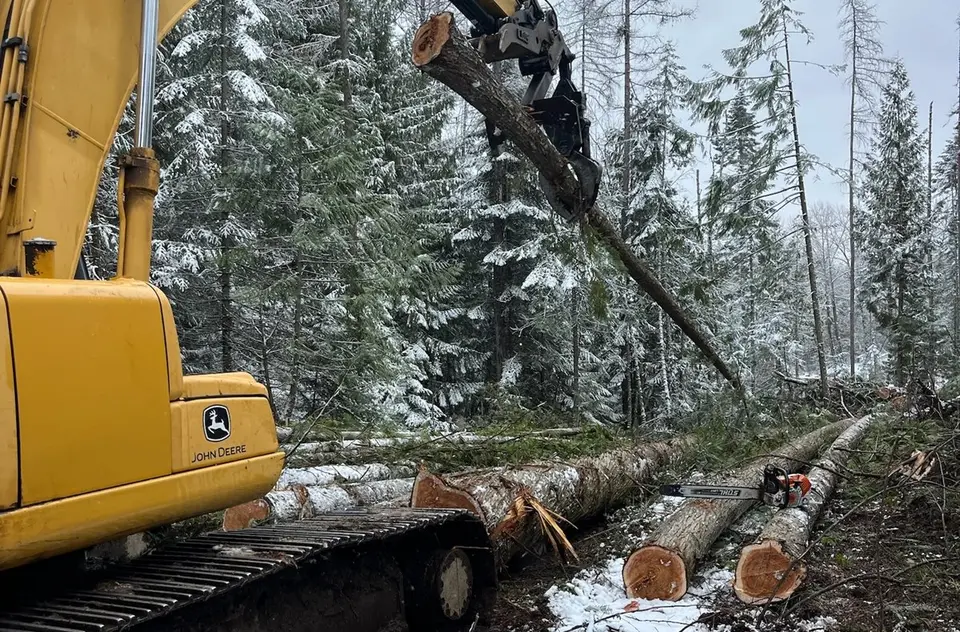
Trails in this country do not stay cleared on their own. Every winter drops limbs and whole trees across routes, and a storm like the December 2025 windstorm can block a back-forty road in fifty places at once. Spring brush growth narrows a path fast, and a couple of missed seasons will close it. We reopen storm-blocked trails and access roads, bucking and clearing blowdown so you can reach cabins, equipment, and timber again, and we do return maintenance passes that keep good routes from slipping back. For properties that matter in winter, fall is the time to clear: a route opened in October is the one you can plow or snowmobile in January.
What does trail clearing cost in North Idaho?
Trail work is priced by the distance cut and the spec of the cut. The drivers are length of the route, cleared width and overhead clearance, how heavy the timber and brush are along the line, slope and rock, stump treatment in the tread, and what happens to the slash. A walking path through open pine costs a fraction of an equipment road through heavy blowdown. Reopening an existing route runs well under cutting a new one. We walk the line with you and put a firm number on it, free.
Why homeowners call us
- Routes sized to foot, ATV, or full equipment access
- Trails routed with the contour, around the best trees
- Stumps flush-cut or ground so nothing catches an axle
- Fence corridors cleared wide enough to build wire
- Blowdown cleared off existing roads and paths
- Slash mulched or hauled, never bermed beside the trail
How the job goes
- STEP 1
Walk the route
We cover the ground with you, talk about what will travel it, and flag a line that works with the slope and the trees worth keeping.
- STEP 2
Set width and spec
The quote states clear width, overhead clearance, and stump treatment, so a footpath, ATV trail, and access road each get priced as what they are.
- STEP 3
Cut the corridor
The crew and mulcher clear the line, buck deadfall, and grind or flush-cut stumps in the tread so the route is usable the day we finish.
- STEP 4
Clean the edges
Slash is chipped or hauled, edge trees are limbed back for clearance, and the route gets a final pass end to end before we leave.
Trail Clearing questions
How wide should a trail through timber be?
A comfortable walking path runs about four feet of clear tread. ATV routes want six to eight feet with overhead limbs taken higher. Tractor and truck access needs ten to twelve feet plus cab clearance. Fence corridors typically clear a strip wide enough to work wire from both sides. Tell us what travels it and we size the cut to that.
Can you clear trails on steep ground?
Yes, and steep parcels are where routing earns its money. We run trails along the contour with grade the users can actually handle, instead of straight up the fall line where water will own the tread every spring. Rocky and steep sections may shift the work from machine to saw crew, which changes pace more than possibility.
A storm dropped trees across my access road. Is that a trail job?
That is one of our most common calls, especially after a big wind event. We buck and clear blowdown off roads and trails so you can reach the cabin, the barn, or the back of the parcel again, and we can widen or improve the route while the crew is there. If a tree is on a structure, that is our emergency service instead.
Will the trail grow back over?
Brush regrows and limbs keep falling, so an untouched trail narrows within a couple of seasons and closes in a few years. The fix is cheap: a maintenance pass every year or two keeps a route open for a fraction of the original cut. Mulched edges also regrow slower than bladed ones, which is one more reason we clear the way we do.