
Tree Health & Pests
Downed Trees and Bark Beetles: What North Idaho Property Owners Should Do This Summer
Mick · June 7, 2026
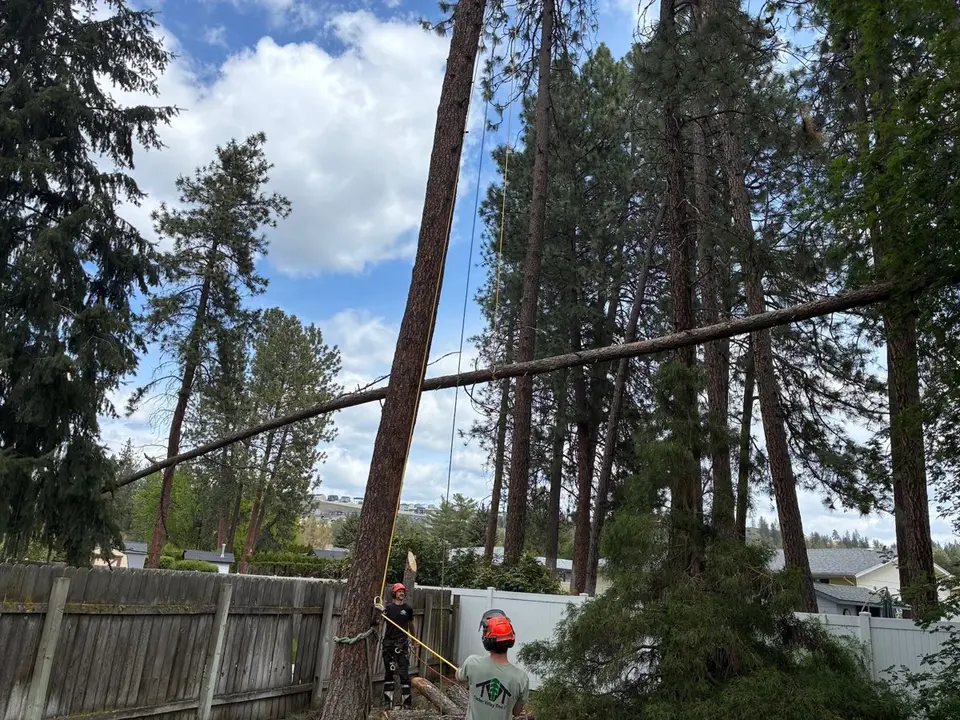
The short answer: Fresh downed pine is beetle breeding stock. Pine engraver beetles move into wind-thrown pine and slash through April and May, and the new generation emerges in June to attack the live trees nearby. If the March windstorm left conifers on the ground at your place, the window to remove, chip, burn, or dry that wood is closing right now.
If the March windstorm left pine and Douglas-fir on the ground around your place, the clock is already running. We run Timber Valley Tree Co. out of Blanchard and cover roughly 25 miles around it: Spirit Lake, Priest River, Sandpoint, Rathdrum, and across the line to Newport. Most of that country is ponderosa pine, Douglas-fir, and western larch, and that species mix is exactly why bark beetles are a real problem here rather than a talking point from somewhere else.
Why downed trees turn into a beetle problem
A green pine lying on the ground is a nursery. The bark is still tight, the phloem underneath is still moist, and that moist inner bark is the layer beetles lay eggs in. Three beetles cause most of the trouble in our area: the pine engraver (Ips pini), the Douglas-fir beetle, and the spruce beetle.
The pine engraver is the one driving the urgency this summer. It moves into wind-thrown ponderosa and lodgepole pine and into fresh pine slash, breeds through April and May, and the adults emerge around June. Once they leave the dead wood, they attack live pines nearby. In a warm, dry North Idaho summer the species can even produce a partial third generation, so the pressure does not let up until fall.
The Douglas-fir beetle works on a bigger scale. It goes after large downed Douglas-fir and western larch, logs roughly 12 inches in diameter and up. If the wind that came through the Selkirk and Priest River country dropped a big fir on your land, that log is a target. For next year’s planning, there is also a preventive tool for high-value firs: MCH anti-aggregation pheromone packets repel Douglas-fir beetles during their May and June flights, but they have to be hung by mid-April to work.
The June deadline that actually matters
The Idaho Department of Lands has been blunt about this: get downed pine cleaned up before the beetles emerge. We are at the front edge of that window now. Wood still lying in the woods in June stops being a cleanup chore and becomes a source, pushing beetles into the live trees you wanted to keep.
One rule worth memorizing: do not create fresh pine slash between January and July. During those months the phloem stays moist and supports a fast beetle buildup. If you have pine trimming or felling that can wait until late summer or fall, wait.
What you can do yourself
For a few downed trees and a manageable slash pile, a homeowner can handle this:
- Get the wood out of the woods. Remove downed pine and slash, or chip it, before June emergence if you can.
- Burn slash where it is legal. Idaho’s closed fire season starts May 10, so you will need a burn permit, and current restrictions in Bonner or Kootenai County can shut burning down entirely. Check before you light anything.
- Process logs into firewood and dry them hard. Spread rounds in full sun. A shady deck of green logs gets infested; a sunny one bakes out.
- Debark or score the bark. Cutting through the bark top to bottom every few inches speeds drying and makes the wood far less attractive to beetles.
- Solarize pine firewood. Pile it in the sun, cover it with 4-mil clear plastic, bury the edges, and leave it sealed for two to three months of sunny weather. The heat kills the larvae under the bark.
Two mistakes people make with good intentions. First, do not stack green pine firewood against live standing pines; the brood crawls straight out of the stack and into the tree. Second, do not dump fresh chip piles at the base of standing trees in spring, because the fresh-chip smell briefly draws beetles in. Spread chips in the sun, or plan chipping for late summer and fall.
The other risk: what the beetles leave standing
Cleanup is only half the story. Trees the beetles killed last season are still standing, and a standing dead conifer is a hazard on a timer. The needles fade from green to yellow to rust red, fine limbs start dropping, and within a couple of years the stem itself is brittle enough to snap in wind that a live tree would shrug off. The Forest Service definition of a hazard tree is a defect that makes failure likely plus a target in the fall zone, and a red-needled pine over a driveway checks both boxes.
Signs a standing tree is infested or already gone: pitch tubes (small blobs of resin on the bark where the tree tried to push attackers out), fine reddish boring dust in bark crevices and at the base, heavy woodpecker work, and a crown fading from the top down. A tree at the pitch-tube stage is usually past saving; the honest service is removing it before winter, both to protect what is under it and to keep it from feeding next spring’s brood. Beetle-killed snags are also premium wildfire fuel, which is one more reason they sit at the top of every defensible space priority list.
When to call us instead
Some of this is not a weekend job. A leaning pine hung up over a driveway, a cracked Douglas-fir near the house, or a couple of acres of blowdown is past the point of a chainsaw and a tarp. Hung and tensioned storm wood is genuinely dangerous cutting, and blowdown at volume needs equipment.
If a storm just dropped a tree on something it should not have, that is our emergency tree service, and we are on call for exactly that. Standing beetle-killed and hazardous trees are handled through tree removal. And when the downed timber has real volume to it, our logging service can haul merchantable logs to a mill instead of leaving them to rot and breed beetles in your woods. We have been doing a steady run of this work around Spirit Lake and the Blanchard valley since the March storm.
Common questions from North Idaho property owners
Do downed trees really attract bark beetles?
Yes. Fresh-downed pine and Douglas-fir with tight bark and moist phloem are prime breeding wood. Pine engravers colonize it through April and May, develop under the bark, and emerge in June to attack live trees nearby. Dry, debarked, or removed wood breaks that cycle.
How long can I leave a downed tree on my property?
For pine, the risk window is now: wood downed over winter and spring should be removed, chipped, burned, or fully dried before June emergence. Once wood is genuinely dry with loose bark, it is no longer beetle habitat, though it may still be a fire fuel concern.
Will beetles from my firewood kill my live trees?
They can, if it is green pine stacked against or near standing pines; the emerging brood moves straight into the closest live tree. Dry rounds fast in full sun, solarize the pile under clear plastic, or store green wood well away from the trees you are keeping.
When is it too late to clean up storm wood?
Once adults emerge and fly, the wood they left is spent, but the beetles are now in your standing trees. Earlier is always better. If you missed the window, shift to watching live pines for pitch tubes, boring dust, and fading crowns, and remove infested trees promptly.
Can I burn slash on my property in North Idaho?
Often yes, with conditions. From May 10 through fire season you need a burn permit in Idaho, and county or statewide restrictions can prohibit burning outright in dry stretches. Chipping and hauling are the year-round alternatives, and we include them on most cleanup jobs.
However you handle it, the goal is the same: get the green wood gone, dried, or off-site before the beetles move next door to the trees you are keeping. If you are not sure whether a tree is a hazard or just ugly, reach out or call (208) 920-9979 and we will come look. The on-site estimate is free.