
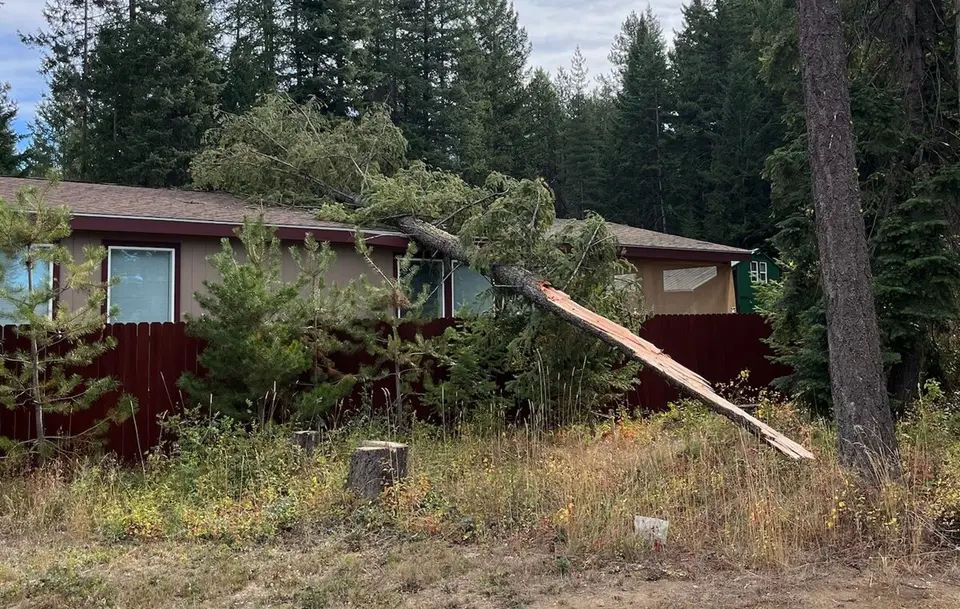
An old timber town with old timber-town trees
Spirit Lake started in 1908 as a mill town of the Panhandle Lumber Company, and the town that grew up around the mill kept its trees. The older blocks near downtown have mature pines standing over small lots, garages, and power drops, which makes for careful, tight-quarters removal work rather than open-ground felling. Along the lakefront, trees lean toward the water and the cabins under them, and out where Highways 41 and 54 meet, the properties stretch into acreage with timber that has not been touched in decades. A town of a couple thousand people does not always get taken seriously by crews based an hour away; we are the opposite case, close enough that Spirit Lake work is some of the easiest scheduling we do. Each of those settings calls for different equipment, and being ten minutes out means we bring exactly what the job needs instead of guessing from a distance.
High water, hard winters
The lake surface sits at 2,440 feet, the highest of the panhandle lakes, and the winters act like it. The lake freezes reliably from December into February, and the same cold that makes the ice fishing good loads every tree in town with wet, heavy snow. Limb breakage and whole-tree failures cluster here after big dumps and wind events, and we handle that cleanup every winter, usually within a day or two because the drive is nothing. Frozen ground has an upside worth planning around: it is often the best time to remove large trees or grind stumps on soft lawns and lakefront lots, because the equipment leaves almost no trace, and winter scheduling is typically easier to book than the spring rush.
Fire country note
Spirit Lake homes back up against continuous forest in nearly every direction, and the same dense stands that made this a timber town are fuel in a dry August. We build defensible space around homes and cabins here, thinning the overcrowded understory and pulling ladder fuels away from structures. Ten minutes from our shop, there is no cheaper insurance we can offer a neighbor.
How our wildfire prevention work goes →What we do in Spirit Lake
Tree Removal
Our core service. Dead, leaning, and beetle-killed trees taken down safely in tight quarters, with full cleanup every time.
Learn moreEmergency Service
Storm damage response from a local crew, available 24/7. We make it safe, get the tree off the structure, and document the work for your insurance claim.
Learn moreTree Trimming
Trimming built for snow country: weight reduction before winter, roof clearance, structure work, and view cuts that do not wreck the tree.
Learn moreStump Grinding
Stumps ground well below grade and cleaned up, with a remote-operated grinder for backyards, slopes, and spots a tow-behind machine cannot reach.
Learn moreDefensible Space
The zone-by-zone clearing work around your structures: ember zone cleanup, lean-and-green fuel breaks, and thinned timber out to 100 feet.
Learn moreSpirit Lake questions
Can you remove a tree in Spirit Lake in the middle of winter?
Yes, and winter is often the best season for it. Frozen ground protects lawns and soft lakefront soil from equipment, and dormant trees are cleaner to work with. Storm-damaged trees should not wait for spring regardless. We work through the season and are ten minutes away when snow damage hits.
What drives the cost of tree removal in Spirit Lake?
Size, lean, condition, and what is underneath the tree. Downtown lots with garages, fences, and service drops need piece-by-piece rigging, which takes longer than dropping a tree on open acreage. Access matters too, especially on lakefront lots. We give free on-site estimates so the number reflects your actual site.
A pine on my lakefront lot is leaning toward the cabin. Is it a problem?
A lean alone is not always trouble, but a new or worsening lean, cracked soil on the uphill side, or dieback in the crown are real warning signs, and lakefront trees take extra wind. We will look at it for free and tell you honestly whether it needs removal, a trim, or just watching.