Acreage living under the Mt Spokane foothills
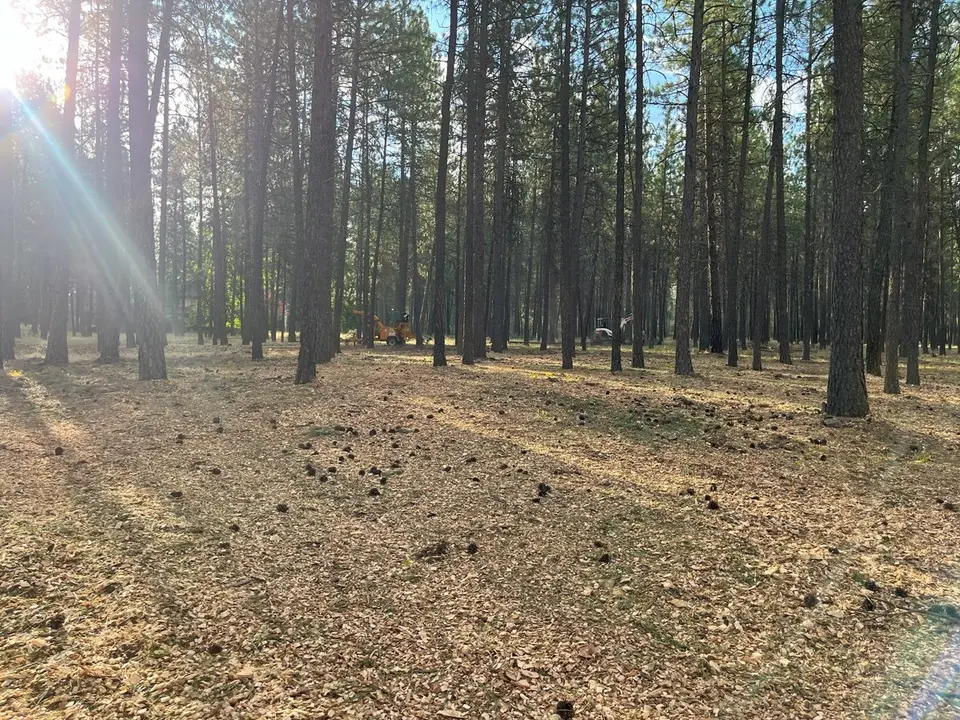
Colbert and Mead are where Spokane's north side turns into country: larger lots, horse properties, and homes set into stands of ponderosa that climb toward the Mt Spokane foothills. Green Bluff sits in the middle of it, a farming community of orchards and family growers working ground that has been farmed since 1902, with addresses split between the two towns. The tree work follows the ground. Acreage owners call us for thinning overgrown stands, removing hazard pines near homes and barns, and clearing brush along drives and fence lines; around Green Bluff we work carefully near orchard blocks, wind machines, and irrigation that a careless crew could cost somebody a season over.
Pines, wind, and the US 2 corridor
The big ponderosas that define these neighborhoods are the same species that made Spokane's 2015 windstorm so destructive a few miles south, and the physics do not change at the city limits. Tall pines over homes on open, wind-exposed benches deserve honest structural evaluation, and the crowded stands on the slopes hold snow-broken tops and deadwood that eventually comes down on its own schedule. We run this corridor along US 2 and the Little Spokane River regularly, with Chattaroy just up the road, so Colbert and Mead jobs get grouped efficiently and even single-tree work stays affordable. Storm cleanup runs the same way: after a big wind event we route the whole corridor at once, working hazards first.
Fire country note
The Mt Spokane foothills are a textbook wildland-urban interface: continuous timber upslope, dry grass downslope, and homes strung between them. Our flagship defensible space service is built for exactly these properties. We clear ladder fuels and brush back from homes and outbuildings, limb the big pines up, and thin the surrounding stand so fire coming off the hills finds less to work with. Foothill homeowners are also seeing insurers ask about this work directly.
How our wildfire prevention work goes →Areas we work around Colbert & Mead
What we do in Colbert & Mead
Tree Removal
Our core service. Dead, leaning, and beetle-killed trees taken down safely in tight quarters, with full cleanup every time.
Learn moreTree Trimming
Trimming built for snow country: weight reduction before winter, roof clearance, structure work, and view cuts that do not wreck the tree.
Learn moreForest Thinning
Stand thinning and fuels reduction on wooded acreage: overstocked timber opened up for fire safety, beetle resistance, and long-term forest health.
Learn moreDefensible Space
The zone-by-zone clearing work around your structures: ember zone cleanup, lean-and-green fuel breaks, and thinned timber out to 100 feet.
Learn moreStump Grinding
Stumps ground well below grade and cleaned up, with a remote-operated grinder for backyards, slopes, and spots a tow-behind machine cannot reach.
Learn moreColbert & Mead questions
Do you work around orchards on Green Bluff?
Yes, with appropriate care. We remove hazard pines and shade trees near orchard blocks, clean up windbreaks, and clear field edges, planning drop zones and equipment paths so fruit trees, trellising, and irrigation stay untouched. We schedule around harvest season, which on Green Bluff is most of the fall.
What affects tree service pricing in Colbert and Mead?
Tree size and condition first, then access and surroundings. Acreage jobs often price well because equipment can work freely and multiple trees share one mobilization. Removals over homes, barns, or arenas take rigging and time. We quote everything free and in person, walking the property with you.
My acreage has never been thinned. What does that involve?
We mark and remove the suppressed, damaged, and overcrowded stems, leaving your best trees with room to grow, then deal with the slash by chipping, hauling, or piling to your preference. A thinned stand is healthier, more windfirm, dramatically less flammable, and better to look at within a season.
Are the tall pines near my house a windstorm risk?
Some are, most are not, and the difference is visible to a trained eye: root and trunk condition, crown balance, exposure, and what the tree would hit. We assess them individually and free. Often the answer is trimming weight out rather than removal, and we will never talk you into taking down a healthy tree.