Farm-and-pine country on the 395 corridor
Deer Park sits twenty-two miles north of Spokane in the northwest corner of Spokane County, at the southern reach of the densely forested highlands that run up through Stevens County, and the ground shows both parents: open farmland runs into timbered ground and back again for miles in every direction. Clayton is four and a half miles up the highway, Loon Lake about ten, and 395 itself narrows to two lanes as it climbs north out of the Spokane sprawl. The properties along it are the classic mix this corridor is known for: working farms with shelterbelts and windbreak pines, wooded acreage carved into homesites, and in-town neighborhoods with mature trees over modest lots. That mix is why our service list fits Deer Park so well. The same week here can include grinding a field's worth of stumps for a pasture expansion, trimming yard pines over a house in town, and taking a storm-cracked cottonwood off a barn roof.
What Deer Park trees actually die of
Wind is the main event. Storms crossing the open ground between Deer Park and Clayton hit shelterbelt and yard pines broadside with nothing to slow them down, and shallow-rooted trees on the prairie margins go over whole. Wet snow does the quieter damage, breaking limbs and tops out of pines every winter and leaving hangers over driveways and rooflines. Farm trees add their own patterns: windbreak rows planted generations ago now carry dead and dying stems that drop debris into fields and fences, and old homestead cottonwoods reach the size where failure means real damage. We handle all of it, and we are comfortable working around livestock, equipment, and irrigation that farm jobs involve.
A real crew within reach of a small town
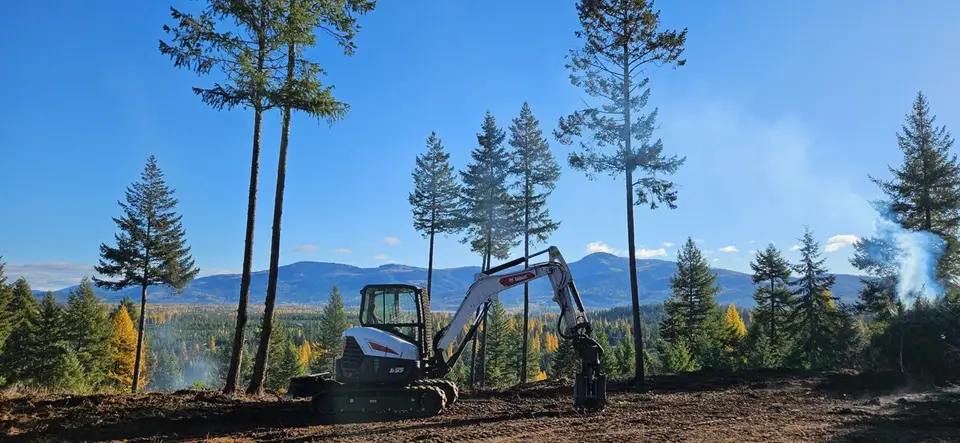
Deer Park property owners have told us the same thing our own area knows: it can be hard to get a full-equipment tree crew to show up for anything smaller than a disaster. Blanchard is twenty-seven miles away, closer than downtown Spokane, and we run Washington routes through this corridor regularly, so a single removal, a day of trimming, or a batch of stumps is worth our drive. We also bring the whole toolbox, which matters in a town where one property can need three different services: bucket truck and climbers for the removals, a grinder for the stumps, and clearing equipment when a field edge or homesite needs real work. Estimates are free and in person, which for farm and acreage work is the only kind that means anything; nobody can price a windbreak from a satellite photo, and we would rather walk your fence line with you than guess.
Fire country note
Dry summers on the timbered edges of Deer Park make wildfire a working concern, especially for homes and outbuildings tucked against pine stands off the highway. Defensible space is our flagship service: we clear brush and ladder fuels back from structures, limb mature pines up off the ground, and thin the dog-hair patches that carry fire. For farms, the same work protects shops, hay storage, and fence lines, and fall or winter is the ideal time to schedule it.
How our wildfire prevention work goes →Areas we work around Deer Park
What we do in Deer Park
Tree Removal
Our core service. Dead, leaning, and beetle-killed trees taken down safely in tight quarters, with full cleanup every time.
Learn moreTree Trimming
Trimming built for snow country: weight reduction before winter, roof clearance, structure work, and view cuts that do not wreck the tree.
Learn moreStump Grinding
Stumps ground well below grade and cleaned up, with a remote-operated grinder for backyards, slopes, and spots a tow-behind machine cannot reach.
Learn moreEmergency Service
Storm damage response from a local crew, available 24/7. We make it safe, get the tree off the structure, and document the work for your insurance claim.
Learn moreLand Clearing
Acreage-scale clearing: overgrown parcels reclaimed, brush and volunteer trees mulched, stumps grubbed, and pasture or fence lines brought back to work.
Learn moreWildfire Prevention
Our flagship service. Defensible space, ladder fuel removal, and stand thinning for homes in the wildland-urban interface, documented for your insurer.
Learn moreDeer Park questions
Do I need an arborist in Deer Park or a tree removal crew?
For most Deer Park calls, the question behind the question is whether a tree is safe. We assess that in person, free: structure, deadwood, root condition, and what the tree threatens. If it can be saved with trimming, we say so; if it is a hazard, we have the crew and equipment to remove it on the spot schedule.
What does stump grinding cost in Deer Park?
Stump diameter, count, and access set the price. One backyard stump is a quick visit; a pasture's worth prices much better per stump because the mobilization is shared. Depth matters too, since grinding for lawn is shallower than grinding for a fence line or replant. We quote it free on site.
Can you trim the big pines shading my house in town?
Yes. In-town Deer Park pines mostly need deadwood cleaned out, limbs cleared off the roof and service lines, and selective thinning so wind and snow load ease up. We do not top trees, because topping creates the weakly attached regrowth that fails in the next storm. Good trimming keeps the tree and protects the house.
Do you handle farm tree work, like windbreaks and field edges?
Regularly. We remove dead stems from windbreak rows, take hazard trees off barns and outbuildings, clear encroaching pines from field margins, and grind stumps so equipment can run clean. We plan around livestock, irrigation, and harvest timing, and we leave gates the way we found them.